Super Agers: The Science of Exceptional Brain Health in Your 80s and 90s—Expert Tips for Cognitive Longevity
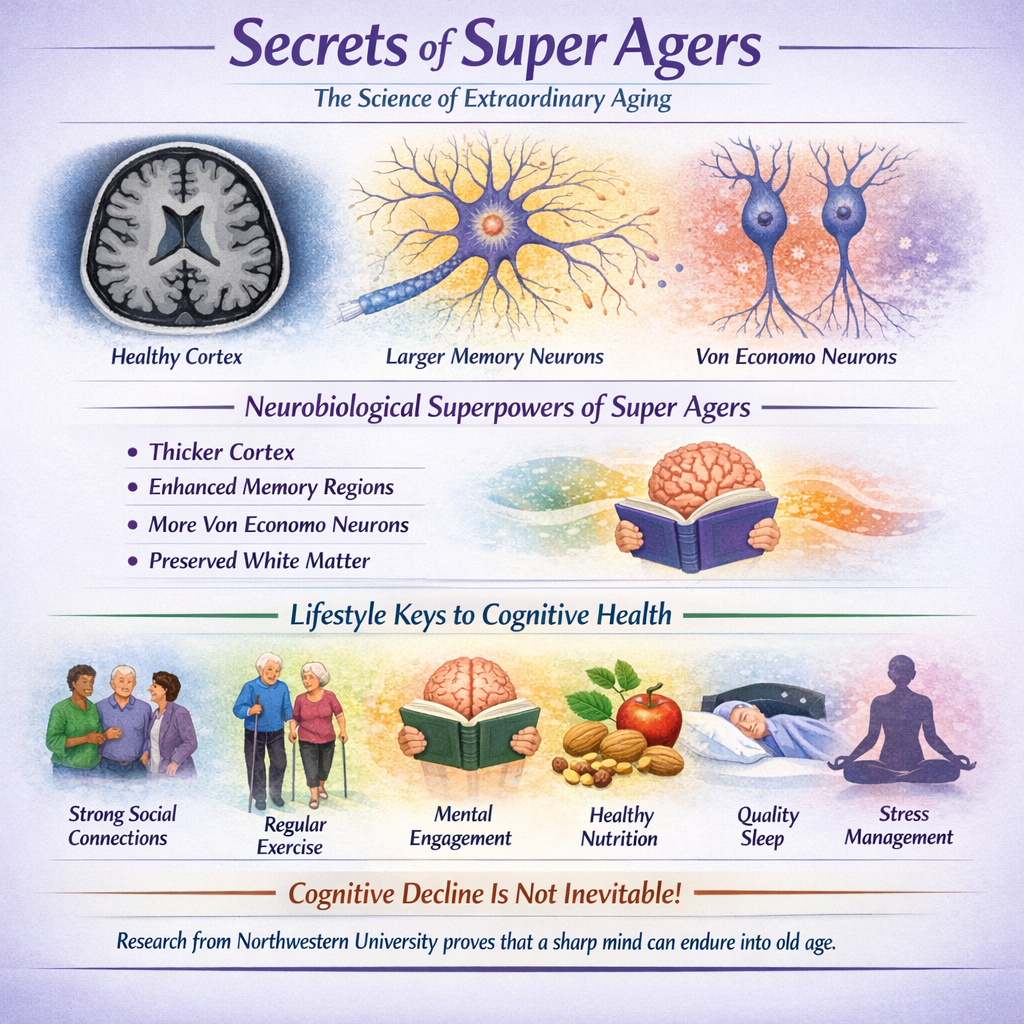
What Are Super Agers? Defining Exceptional Cognitive Aging
Super agers are defined by Northwestern University's groundbreaking SuperAging Research Initiative as individuals age 80 years or older whose performance on memory tests equals or exceeds that of individuals 20-30 years younger. More specifically, super agers score at least 9 out of 15 on a delayed word recall test—a score placing them in the cognitive range of people in their 50s and 60s—despite being substantially older. This exceptional cognitive preservation is rare but not unique; researchers have identified nearly 300 such individuals through two-and-a-half decades of systematic study.[1]
The discovery that cognitive super-aging is possible contradicts the widely-held belief that cognitive decline represents an inevitable consequence of aging. Instead, research demonstrates that a subset of older adults successfully resist or are resilient to age-related cognitive changes, maintaining the mental sharpness and memory function associated with much younger individuals.[1]

Exercise and Aging: How to Build Strength - The New York Times
Prevalence and Population Characteristics
While super agers represent a distinctive minority—less than 10% of the aging population—their existence demonstrates that exceptional cognitive longevity is achievable through an interconnected combination of genetic, neurobiological, and behavioral factors. Importantly, research indicates that while genetics contribute to super-aging capacity, lifestyle factors play substantial roles, suggesting that many individuals may enhance their cognitive longevity through behavioral modifications and lifestyle choices.[1]

The Neurobiology of Super Agers: Brain Structure and Function
Brain Structural Preservation: Resisting Cortical Shrinkage
One of the most remarkable findings from 25 years of super ager research is that their brains resist the structural changes typically associated with aging. Unlike typical older adults, whose brains experience progressive cortical thinning—a reduction in thickness of the brain's outer layer involved in cognitive processing—super agers show striking preservation of cortical thickness. In fact, super agers demonstrate cortical thickness comparable to or sometimes exceeding that of middle-aged adults, with particularly pronounced preservation in the anterior cingulate cortex, a brain region critical for memory, attention, decision-making, emotional control, and motivation.[1]
Brain volume loss represents another hallmark of typical aging, with cognitively normal older adults experiencing approximately 2.24% average annual brain volume loss. In striking contrast, super agers experience only approximately 1.06% annual brain volume loss—less than half the rate of their age-matched peers—enabling them to maintain substantially more neural tissue and connectivity throughout aging.[1]
Exceptional Neuronal Health: Larger and Resistant Neurons
Microscopic examination of super agers' brains reveals extraordinary cellular-level preservation, particularly in the entorhinal cortex—a brain region critical for episodic memory (memory for events and experiences). Super agers possess significantly larger entorhinal neurons compared to cognitively average peers of the same age, and remarkably, even compared to individuals 20-30 years younger. This exceptional neuronal size correlates with superior memory performance, suggesting that maintaining healthy, robust neurons represents a biological substrate of exceptional cognitive aging.[1]
The mechanisms underlying super agers' neuronal preservation remain incompletely understood but likely involve resistance to Alzheimer's-related pathology (reduced formation of amyloid-beta plaques and tau tangles), enhanced cellular repair mechanisms, superior antioxidant defenses, reduced neuroinflammation, and greater neuroplasticity. These cellular-level advantages accumulate to preserve the neural architecture essential for memory and cognitive function.[1]
The Von Economo Neuron Advantage
A particularly striking neurobiological finding involves von Economo neurons—specialized nerve cells linking the frontal cortex (involved in abstract thinking, creativity, and judgment) to distant brain regions involved in social intelligence and emotional awareness. Super agers possess higher densities of von Economo neurons compared to age-matched peers, with densities approximating those of much younger adults. This cellular advantage may underlie the exceptional social engagement and interpersonal skills frequently observed in super agers.[1]

Frontiers | Brain Morphometry and Cognitive Performance in ...
Resistance and Resilience: Two Pathways to Super-Aging
Research reveals that super aging emerges through two distinct neurobiological mechanisms, either or both of which may operate in any given individual. The first mechanism is resistance: some super agers simply do not develop the amyloid plaques and tau tangles characteristic of Alzheimer's disease pathology, maintaining pristine brain pathology despite advanced age. This appears to involve superior genetic protection, enhanced immune defense, or other protective mechanisms preventing pathology accumulation.[1]
The second mechanism is resilience: some super agers develop Alzheimer's-related pathology (plaques and tangles) but demonstrate brain regions resistant to the damage these pathologies typically cause. These individuals appear to possess superior capacity to tolerate pathology without cognitive consequences, maintaining function despite neurobiological changes that would impair typical individuals. This resilience likely involves preserved neural networks, enhanced neuroplasticity, and superior cognitive reserve.[1]
The Brain Signature: Distinctive Structural Features
Preserved Hippocampus and Memory Circuits
The hippocampus—the seahorse-shaped brain structure critical for forming new memories and retrieving past experiences—typically shrinks with age. In super agers, the hippocampus demonstrates exceptional preservation, remaining larger and more robust than in cognitively normal age-matched peers and even approaching the size seen in younger adults. This structural preservation directly correlates with superior memory performance.[1]
The broader memory circuit extending from hippocampus through entorhinal cortex to prefrontal cortex shows striking preservation in super agers compared to typically aging brains. This intact neural circuit enables the exceptional memory function that defines super agers, preserving the neural infrastructure necessary for encoding, storing, and retrieving information throughout life.[1]
White Matter Integrity: Protected Brain Highways
White matter—the brain's "highways" composed of myelinated axons connecting different brain regions—typically undergoes age-related deterioration, including demyelination (loss of protective myelin sheaths) and microstructural degradation. Super agers demonstrate superior white matter preservation, particularly in frontal regions, with higher fractional anisotropy (organization of white matter fibers) and lower mean diffusivity (unrestricted water movement indicating tissue integrity). This superior white matter microstructure suggests that super agers' brain networks remain optimally connected, facilitating efficient communication between brain regions essential for cognition.[1]
Cholinergic System Preservation
The basal forebrain cholinergic system—neural circuits using acetylcholine neurotransmitter to support attention and memory—undergoes significant degradation in typical aging and is particularly vulnerable to Alzheimer's disease pathology. Super agers demonstrate superior preservation of this critical system, maintaining higher densities of cholinergic neurons and better system function compared to age-matched peers. This preservation of a system particularly vulnerable in neurodegenerative disease represents another distinctive neurobiological advantage contributing to super agers' exceptional cognitive function.[1]
Key Lifestyle Factors: The Behavioral Foundation of Super-Aging
Social Connectedness: The Strongest Shared Trait
Among the most striking findings from super ager research is that despite diverse lifestyles, backgrounds, and approaches to exercise, super agers share one nearly universal characteristic: robust social engagement and strong interpersonal relationships. A 2025 study from the Alzheimer's & Dementia journal confirmed that social connectedness was the strongest shared trait among super agers, with the majority reporting active social lives, meaningful friendships, and regular social interaction.[1]

The Benefits of Relationships and Connection for Seniors

Seniors and Friendships: The Benefits of Social Connections ...
This finding aligns with extensive research demonstrating that social engagement predicts cognitive outcomes, with lonely and socially isolated individuals facing substantially elevated dementia risk. The mechanisms through which social connection preserves cognition likely involve cognitive stimulation from complex social interactions, stress reduction through social support, enhanced physical activity through social engagement, and possibly direct neurobiological effects (social engagement may enhance neuroplasticity and cognitive reserve).[1]
Importantly, quality of social connections may matter more than quantity: research suggests that meaningful, emotionally supportive relationships provide greater cognitive protection than large numbers of superficial acquaintances. Super agers tend to cultivate deep, mutually supportive relationships and actively maintain social networks throughout aging.[1]
Physical Exercise: Movement as Brain Medicine
Regular physical activity represents another foundational lifestyle factor contributing to super-aging. Exercise provides extraordinary cognitive benefits through multiple mechanisms: increasing blood flow to the brain, promoting neurogenesis (generation of new neurons), enhancing neurotropic factor production that supports neural survival and growth, reducing inflammation, improving vascular health, and enhancing brain volume preservation.[1]
Super agers tend to maintain regular exercise routines throughout their lives, though the specific types of exercise vary widely—some emphasize aerobic activity like walking or cycling, others focus on strength training, yoga, or tai chi, while many combine multiple modalities. Research suggests that the consistent engagement and enjoyment derived from physical activity matters more than the specific exercise type. Aerobic exercise providing cardiovascular benefits, strength training maintaining muscle mass, balance training reducing fall risk, and flexibility exercises preventing injury all contribute to healthy aging.[1]
Cognitive Engagement and Mental Challenge
The principle "use it or lose it" applies powerfully to brain aging: individuals who engage in cognitively challenging activities throughout their lives demonstrate superior cognitive preservation. Super agers tend to maintain active mental engagement through diverse pursuits: some continue professional work into advanced age, others pursue hobbies requiring sustained concentration, many engage in lifelong learning through reading, classes, or intellectual discussion groups.[1]

Mental exercise can reverse a brain change linked to aging ...
High-level cognitive tasks—solving complex problems, learning new skills, engaging in strategic games, creative pursuits—appear particularly protective, likely because they activate and strengthen critical brain networks that deteriorate when unused. The brain operates like a muscle: using it strengthens it, while disuse leads to atrophy. Super agers appear to intuitively understand this principle and maintain cognitively demanding activities throughout their lives.[1]
Sleep Quality and Sleep Continuity
Sleep represents a critical yet often-overlooked component of brain health and cognitive preservation. During sleep, the brain consolidates memories, clears metabolic waste products including amyloid-beta (implicated in Alzheimer's disease), and performs essential maintenance. Super agers tend to report good sleep quality and adequate sleep duration (typically 7-8 hours nightly), which supports both immediate cognitive function and long-term brain health.[1]
Nutritional Patterns Supporting Brain Longevity
Research on dietary patterns supporting cognitive longevity consistently identifies plant-forward, anti-inflammatory diets as protective against cognitive decline. The Mediterranean diet—emphasizing olive oil, abundant vegetables and fruits, whole grains, legumes, nuts, fish, and moderate dairy—consistently demonstrates association with reduced dementia risk and better cognitive outcomes in observational and interventional studies. Similarly, the MIND diet (Mediterranean-DASH Intervention for Neurodegenerative Delay), specifically designed to prevent Alzheimer's disease, incorporates leafy greens, berries, nuts, fish, olive oil, and whole grains while limiting red meat, saturated fat, and processed foods.[1]

7-Day Mediterranean Diet Meal Plan for Healthy Aging
Key nutritional principles supporting super-aging include: abundant antioxidant-rich fruits and vegetables (berries, dark leafy greens, colorful produce), omega-3 fatty acids from fish or plant sources (flaxseeds, walnuts), limiting processed foods and added sugars, adequate protein maintaining muscle mass, and staying well-hydrated. Additionally, polyphenol-rich beverages including coffee and tea show associations with reduced dementia risk, likely through antioxidant and anti-inflammatory mechanisms.[1]
Stress Management and Emotional Regulation
Chronic stress impairs cognition and accelerates brain aging through multiple mechanisms including inflammatory activation, cortisol-mediated neural damage, impaired neurogenesis, and adverse effects on memory consolidation. Super agers tend to employ effective stress management strategies, whether through meditation, mindfulness, yoga, creative pursuits, time in nature, or other approaches enabling emotional equilibrium. The specific technique matters less than consistent practice and genuine success in stress reduction.[1]
The Genetic Component: Nature and Nurture in Super-Aging
Genetic Contributions to Super-Aging Capacity
Research indicates that genetics contribute substantially to super-aging capacity, with twin studies and family studies suggesting heritability of cognitive aging rates. Genetic variants affecting tau pathology, amyloid processing, inflammation regulation, and neuroplasticity influence dementia risk and cognitive aging trajectories. However, genetics represent only one component of super-aging—studies consistently demonstrate that individuals with favorable genetic backgrounds sometimes experience age-related cognitive decline if lifestyle factors are unfavorable, while some individuals with standard genetics maintain exceptional cognition through favorable lifestyle patterns.[1]
Gene-Environment Interactions: The Integrated Model
The contemporary understanding of super-aging emphasizes gene-environment interactions: genetics establish predisposition and capacity, while lifestyle factors and environmental circumstances determine whether that capacity is realized. This integrated model suggests that even individuals without optimal genetic backgrounds for cognitive preservation may substantially enhance their cognitive longevity through lifestyle optimization, while those with favorable genetics must still maintain healthy lifestyle patterns to realize their cognitive potential.[1]
Implications for the Broader Aging Population
From Super-Aging to Healthy Aging: Universal Principles
While super agers represent the exceptional end of the cognitive aging spectrum, the lifestyle and behavioral factors characterizing super agers offer guidance for the broader aging population seeking to preserve cognitive function and resist dementia. The universal principles emerging from super ager research include:[1]
1. Prioritize Social Engagement: Cultivate meaningful relationships, maintain active social connections, engage in community activities, and prioritize time with family and friends who provide genuine support and intellectual stimulation.
2. Exercise Regularly: Maintain consistent physical activity combining aerobic exercise, strength training, balance work, and flexibility. Find movement you genuinely enjoy to ensure long-term adherence.
3. Engage Cognitively: Pursue intellectually stimulating activities, continue learning throughout life, engage in strategic games or hobbies requiring sustained attention, and tackle novel challenges preventing cognitive stagnation.
4. Prioritize Sleep: Maintain consistent sleep schedules, aim for 7-8 hours nightly, and address sleep disturbances that may impair cognition and accelerate brain aging.
5. Eat a Brain-Healthy Diet: Emphasize plant-forward, anti-inflammatory dietary patterns including abundant vegetables, fruits, whole grains, legumes, nuts, fish, and healthy oils while limiting processed foods, added sugars, and saturated fats.
6. Manage Stress: Implement effective stress management strategies supporting emotional regulation and preventing chronic stress-related brain aging.
7. Stay Engaged with Life: Maintain sense of purpose, remain engaged with meaningful activities and relationships, and resist social isolation or disengagement from life.
The Future of Super-Aging Research and Applications
Emerging Interventions and Preventive Strategies
As super-aging research continues, scientists hope to translate discoveries into interventions helping broader populations preserve cognitive function. Potential future directions include: identifying genetic markers predicting super-aging capacity and enabling personalized intervention strategies, developing medications targeting identified neurobiological mechanisms of cognitive resilience, designing brain-training programs optimizing cognitive reserve, and implementing community-level interventions promoting super-aging-aligned lifestyle patterns.[1]
Shifting Perspectives on Aging and Cognitive Decline
Twenty-five years of super-aging research has fundamentally shifted scientific understanding of cognitive aging, demonstrating that the decline previously considered inevitable is actually preventable or substantially mitigatable through appropriate biological, behavioral, and environmental factors. This paradigm shift suggests that aging research and gerontology should focus not just on treating age-related diseases but on understanding and promoting cognitive resilience and resistance—enabling people to age exceptionally rather than merely adequately.[1]
Conclusion: The Promise of Cognitive Longevity
Super agers—individuals age 80 and older whose memory matches that of people 20-30 years younger—represent a remarkable yet achievable model of cognitive longevity, challenging the assumption that cognitive decline represents an inevitable consequence of aging. Over 25 years of rigorous research has identified distinctive neurobiological characteristics enabling super aging: preserved cortical thickness, larger and healthier neurons, superior white matter integrity, maintained cholinergic systems, and resistance to Alzheimer's pathology. Equally important, research identifies behavioral and lifestyle factors strongly associated with cognitive longevity: robust social engagement, regular physical exercise, sustained cognitive stimulation, quality sleep, brain-healthy nutrition, and effective stress management.[1]
Critically, while genetics contribute to super-aging capacity, emerging evidence suggests that lifestyle factors play substantial roles, positioning cognitive longevity as partially within individual control. This suggests that anyone, regardless of genetic background, might substantially enhance their cognitive aging trajectory through intentional lifestyle optimization. The brain is not a static, unchangeable organ inevitably declining with age—it is a dynamic, plastic system capable of resistance and resilience when appropriately supported.[1]
For anyone seeking to preserve cognitive sharpness, maintain independence, and resist dementia into advanced age, the science of super-aging offers clear guidance: prioritize the social, physical, cognitive, nutritional, and emotional foundations of brain health. This evidence-based approach to aging offers reasonable prospect of remaining mentally sharp, cognitively engaged, and functionally independent well into your 80s, 90s, and beyond. The question is no longer whether cognitive longevity is possible—super agers have definitively answered that question affirmatively—but rather how we collectively embrace the lifestyle patterns enabling cognitive preservation and make them accessible and normative for aging populations worldwide.[1]
Citations:
Northwestern University SuperAging Research Initiative - Health-Related Behaviours in Octogenarians and Nonagenarians (2024); PMC - Defining exceptional cognition in older adults: A systematic review of cognitive super-ageing (2023); PMC - Broadening the identification of superior cognition in older age (2021); PMC - Longitudinal Neuropsychological Performance of Cognitive SuperAgers (2014); PMC - Brain structure and phenotypic profile of superagers (2023); PMC - Exploring the secrets of super-aging: UK Biobank study (2023); Sage Journals - Unveiling the Social Life of SuperAgers (2024); PMC - Integrity of Neuronal Size in the Entorhinal Cortex (2022); Alzheimer's & Dementia Journal - The first 25 years of Northwestern University SuperAging Program (2025); AlzInfo.org - What Super Agers Can Teach Us About the Aging Brain (2025); ScienceDaily - These 80-year-olds have the memory of 50-year-olds (2025); Medscape - Inside the Science of Superagers (2025); Medical News Today - Superagers: What makes them resistant to cognitive decline (2025); Alzheimer's.gov - Cognitive super agers defy typical age-related decline (2025); UCLA Health - Super-agers retain cognition through lifestyle and genetics (2024); MedlinePlus - Live long, be well: Science-based tips for healthy aging (2022); PMC - Diet strategies for promoting healthy aging and longevity (2023); Agappe - The Superpower of Connection: How Friendships Fuel Brain Health (2025)[1]

Post your opinion
No comments yet.