The Dutch Kraamzorg System: How the Netherlands Revolutionized Postpartum Care With Home-Visiting Maternity Nurses
The Postpartum Care Crisis Facing New Parents Worldwide
The birth of a child is one of the most transformative experiences in human life. It is also one of the most physically demanding, emotionally turbulent, and logistically overwhelming. In the hours and days following delivery, new parents — particularly birthing mothers — face a daunting convergence of challenges: recovering from labor, learning to feed and soothe a newborn, navigating hormonal upheaval, managing sleep deprivation, and adjusting to a fundamentally altered identity.
Yet in most countries around the world, the support available to families during this critical window is astonishingly thin. In the United States, for example, new mothers are typically discharged from the hospital within 24 to 48 hours after a vaginal delivery, often with little more than a stack of pamphlets and a follow-up appointment scheduled weeks later. In the United Kingdom, midwifery home visits exist but are increasingly stretched thin by staffing shortages and budget constraints. Across much of the developing world, formal postpartum support is virtually nonexistent.
The consequences of this care gap are serious. Postpartum depression affects an estimated 10 to 20 percent of new mothers globally. Breastfeeding difficulties contribute to early cessation, with cascading effects on infant health. Preventable complications — from postpartum hemorrhage to neonatal jaundice — can go undetected when new families are left to navigate the first days alone. And the psychological toll of feeling unsupported during such a vulnerable period can strain relationships, erode parental confidence, and leave lasting emotional scars.
Against this backdrop, one small European nation has developed a postpartum care system so comprehensive, so deeply embedded in its culture, and so effective that it has become the envy of maternal health advocates around the world.
Welcome to the Dutch kraamzorg — and the remarkable maternity nurses who make it possible.
What Is Kraamzorg? Understanding the Dutch Postpartum Care Tradition
The Meaning Behind the Name
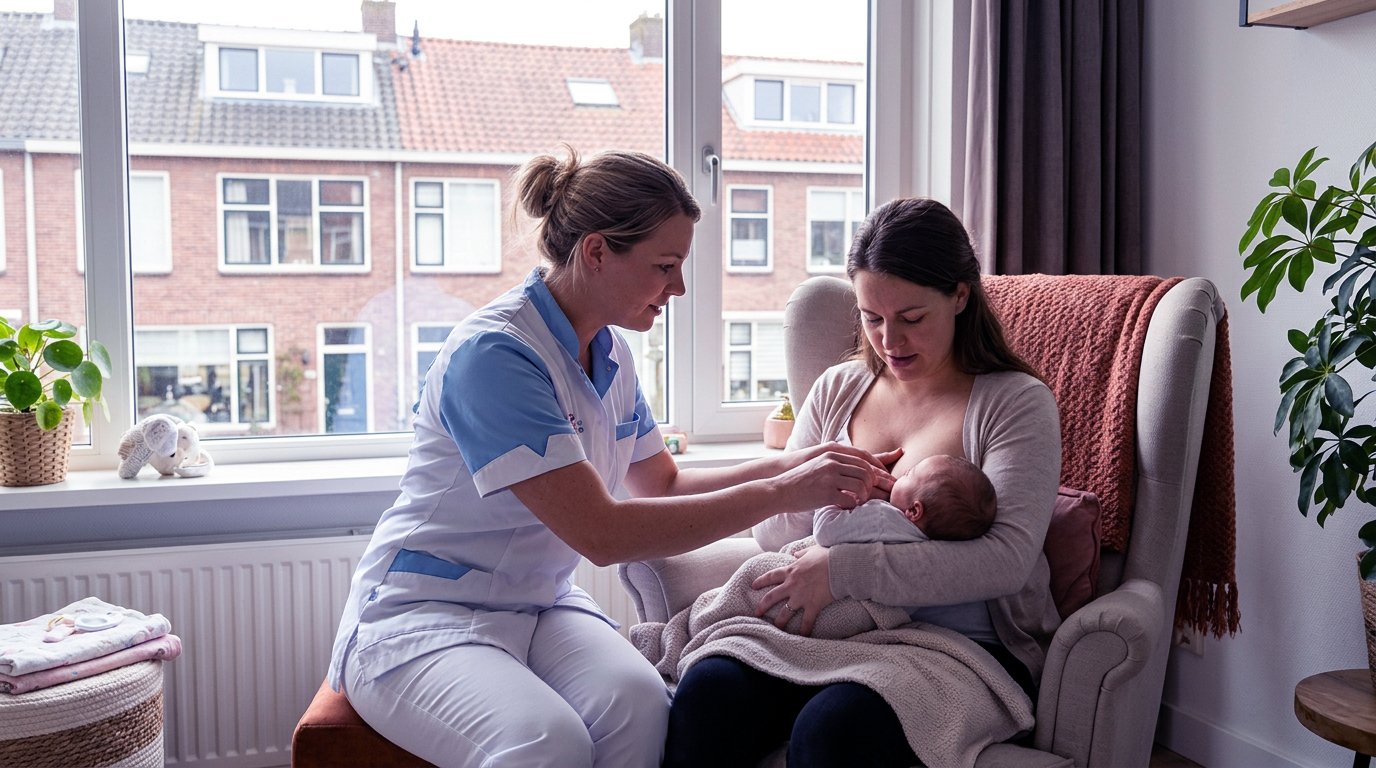
The word kraamzorg (pronounced roughly "KRAHM-zorg") is Dutch for "maternity care" — specifically, the care provided to a mother and newborn during the kraamtijd, or "lying-in period," which traditionally spans the first eight to ten days after birth. The professionals who deliver this care are known as kraamverzorgenden (singular: kraamverzorgende), which translates to "maternity care assistants" or, more colloquially, maternity nurses.
While the term "nurse" is used loosely in English-language descriptions, kraamverzorgenden occupy a distinct professional category in the Dutch healthcare system. They undergo specialized training — typically a three-year vocational program — that equips them with expertise in newborn care, maternal health assessment, breastfeeding support, postpartum recovery, basic household management, and family counseling.
How Kraamzorg Works in Practice
The kraamzorg process begins well before the baby arrives. During pregnancy, expectant parents arrange their kraamzorg coverage through one of the many kraamzorg agencies operating across the Netherlands. Because kraamzorg is considered an essential component of maternity care, it is covered by the country's basic health insurance — meaning virtually every family has access to it, regardless of income or social status.
Here is how the system typically unfolds:
Before Birth:
- The expectant parents select a kraamzorg agency and are matched with a kraamverzorgende.
- An intake consultation takes place during the final weeks of pregnancy, during which the maternity nurse learns about the family's needs, preferences, birth plan, and home setup.
- The kraamverzorgende helps the family prepare for the postpartum period, offering guidance on what supplies to have on hand and what to expect in the first days.
During Birth (Home Births):
- The Netherlands has one of the highest home birth rates in the developed world, with approximately 13 percent of births occurring at home (though this figure has declined in recent decades). During a planned home birth, the kraamverzorgende assists the midwife, prepares the birthing environment, and provides immediate support to the mother and newborn.
After Birth (The Kraamtijd):
- For eight to ten consecutive days, the kraamverzorgende visits the family's home for several hours each day — typically three to eight hours per day, depending on the family's assessed needs and insurance coverage.
- The total package generally includes 24 to 80 hours of in-home care.
-

What Does a Kraamverzorgende Actually Do? A Day in the Life
The scope of a kraamverzorgende's responsibilities is remarkably broad, encompassing clinical monitoring, practical household support, emotional care, and education. This holistic approach — treating the entire family unit rather than just the mother or just the baby — is central to what makes kraamzorg so effective.
Maternal Health Monitoring
In the days following birth, a mother's body undergoes profound physiological changes. The kraamverzorgende monitors these carefully, checking for:
- Uterine involution: Assessing whether the uterus is contracting back to its pre-pregnancy size at an appropriate rate.
- Lochia (postpartum bleeding): Monitoring the volume, color, and odor of postpartum discharge for signs of complications such as retained placental tissue or infection.
- Blood pressure and temperature: Detecting early signs of postpartum preeclampsia or infection.
- Perineal or cesarean wound healing: Ensuring that any tears, episiotomies, or surgical incisions are healing properly.
- Emotional well-being: Screening for signs of postpartum depression, anxiety, or psychosis — conditions that often emerge in the first days and weeks after birth.
If the kraamverzorgende identifies any concerns, she escalates them to the verloskundige (midwife) or the family's general practitioner, ensuring that potential complications are caught and addressed early.
Newborn Care and Assessment
The health of the newborn is monitored with equal diligence:
- Weight tracking: Newborns typically lose up to 10 percent of their birth weight in the first few days before beginning to regain it. The kraamverzorgende weighs the baby regularly to ensure this pattern is on track.
- Jaundice screening: Monitoring the baby's skin and eyes for signs of neonatal jaundice, a common condition that can require phototherapy if severe.
- Umbilical cord care: Ensuring the cord stump remains clean and dry until it naturally separates.
- Feeding assessment: Observing breastfeeding sessions to evaluate latch, milk transfer, and the baby's feeding patterns. For formula-feeding families, guidance on proper preparation, quantities, and feeding schedules is provided.
- Temperature regulation: Ensuring the baby is dressed appropriately and maintaining a healthy body temperature.
- Diaper output: Tracking the number and consistency of wet and soiled diapers as an indicator of adequate hydration and nutrition.
- Heel prick test coordination: Assisting with the timing and logistics of the national newborn screening (conducted around day 3–7), which tests for rare but serious metabolic and genetic conditions.
Breastfeeding Support
Breastfeeding, while natural, is far from intuitive for many new mothers. Difficulties with latch, nipple pain, milk supply concerns, engorgement, and the sheer exhaustion of feeding around the clock are among the most common reasons new mothers abandon breastfeeding earlier than intended.
The kraamverzorgende serves as an on-the-ground breastfeeding coach, offering:
- Hands-on guidance with positioning and latch
- Reassurance about normal feeding patterns and cluster feeding
- Strategies for managing engorgement, plugged ducts, and nipple soreness
- Assessment of whether the baby is transferring milk effectively
- Referral to a lactation consultant (lactatiekundige) if more specialized support is needed
This consistent, daily support during the critical establishment period is believed to be a key factor in the Netherlands' relatively high breastfeeding initiation rates.
Household Support
One of the most distinctive — and deeply appreciated — aspects of kraamzorg is the practical household help that the kraamverzorgende provides. This is not a luxury add-on; it is considered an integral part of postpartum recovery. Tasks commonly performed include:
- Preparing nutritious meals and snacks for the mother and family
- Light cleaning and tidying of the home
- Doing laundry
- Making beds
- Caring for older children (helping with meals, school preparation, and entertainment)
- Receiving and managing visitors
- Grocery shopping or coordinating deliveries
By taking these daily burdens off the new parents' plates, the kraamverzorgende creates the conditions for the mother to focus on what matters most: resting, recovering, and bonding with her baby.
Education and Guidance for Parents
Beyond the immediate clinical and practical support, the kraamverzorgende serves as a teacher, mentor, and confidence-builder — particularly for first-time parents. Topics covered often include:
- Safe sleep practices: Educating parents about back-sleeping, room-sharing, and creating a safe sleep environment to reduce the risk of sudden infant death syndrome (SIDS).
- Bathing and hygiene: Demonstrating how to safely bathe a newborn.
- Soothing techniques: Teaching parents how to swaddle, hold, and calm a fussy baby.
- Recognizing warning signs: Helping parents understand when a symptom is normal and when it warrants medical attention.
- Self-care: Encouraging the mother to rest, eat well, accept help, and attend to her own physical and emotional needs.
- Partner involvement: Coaching the non-birthing partner on how to actively participate in newborn care and support the recovering mother.

The History and Cultural Roots of Kraamzorg
A Tradition Centuries in the Making
The concept of a dedicated postpartum caregiver is not a modern invention in the Netherlands. Its roots trace back centuries to a time when baker (the traditional Dutch term for a woman who assisted during and after childbirth) was a recognized community role. In the pre-industrial era, extended family networks, neighbors, and community midwives naturally provided the kind of comprehensive postpartum support that kraamzorg formalizes today.
As the Netherlands industrialized and urbanized in the 19th and early 20th centuries, these informal support networks began to erode. Nuclear families replaced extended households, and women increasingly gave birth without the presence of experienced female relatives who had traditionally guided them through the postpartum period.
Formalization and Professionalization
Recognizing the growing gap in postpartum care, Dutch health authorities began to formalize the kraamzorg system in the early to mid-20th century. Training programs were established, professional standards were codified, and kraamzorg was integrated into the national healthcare framework.
A pivotal moment came when kraamzorg was included in the Dutch basic health insurance package (basisverzekering), ensuring universal access. This decision reflected a national consensus that postpartum care is not a private luxury but a public health priority — an investment in the well-being of mothers, babies, and families that yields dividends for society as a whole.
Kraamzorg and the Dutch Home Birth Tradition
The kraamzorg system is intimately connected to the Netherlands' longstanding tradition of home birth. For much of the 20th century, the Netherlands had the highest home birth rate in the developed world, and while that rate has declined significantly in recent decades (from roughly 35% in the 1990s to approximately 13% today), the cultural infrastructure surrounding home-based maternity care remains strong.
The Dutch approach to childbirth is rooted in a philosophy that views pregnancy and birth as natural physiological processes rather than medical events requiring hospital intervention. Low-risk pregnancies are managed by community midwives (verloskundigen), and the decision to give birth at home or in a hospital is made collaboratively between the midwife and the expectant parents.
This philosophy naturally extends into the postpartum period: if birth can safely take place at home, it follows that postpartum recovery can — and should — also be supported at home, in the family's own environment, with the guidance of a trained professional.
The Evidence: Does Kraamzorg Actually Improve Outcomes?
While the Dutch kraamzorg system is often praised on intuitive and humanitarian grounds, a growing body of evidence suggests that its benefits are also measurable and significant.
Early Detection of Complications
One of the most critical functions of the kraamverzorgende is the early identification of postpartum complications — both maternal and neonatal. Daily home visits mean that problems such as postpartum infection, excessive bleeding, neonatal jaundice, feeding difficulties, and signs of postpartum depression are caught much earlier than they would be in systems where the first postpartum check-up occurs weeks after discharge.
Early detection translates directly into earlier intervention, which can prevent minor issues from escalating into serious, costly, and potentially life-threatening complications.
Breastfeeding Support and Duration
Research consistently shows that consistent, skilled breastfeeding support in the early postpartum period is one of the strongest predictors of breastfeeding success. The daily presence of a kraamverzorgende — who can observe multiple feeding sessions, troubleshoot problems in real time, and provide ongoing encouragement — creates an ideal support environment.
While the Netherlands' breastfeeding rates are not the highest in Europe, the kraamzorg system is credited with contributing to strong breastfeeding initiation rates and helping mothers overcome early challenges that might otherwise lead to premature weaning.
Maternal Mental Health
The postpartum period is a time of heightened vulnerability for mental health. Hormonal shifts, sleep deprivation, physical pain, identity upheaval, and social isolation create fertile ground for postpartum depression and anxiety.
The kraamverzorgende's daily presence serves as a crucial buffer against several of these risk factors:
- Reducing isolation: Having a knowledgeable, caring professional in the home each day combats the loneliness that many new parents experience.
- Normalizing the experience: The kraamverzorgende can reassure parents that what they're feeling — the overwhelm, the uncertainty, the emotional volatility — is normal, reducing shame and self-doubt.
- Screening and referral: Trained to recognize early signs of postpartum mood disorders, the kraamverzorgende can facilitate timely referral to mental health services.
- Practical relief: By handling household tasks and providing hands-on help with the baby, the kraamverzorgende alleviates the relentless burden that contributes to burnout and emotional depletion.
Parental Confidence and Competence
Perhaps the most universally reported benefit of kraamzorg — across studies, surveys, and anecdotal accounts — is the boost in parental confidence. First-time parents, in particular, consistently describe the kraamverzorgende as transformative: someone who not only helped them survive the first week but taught them how to care for their baby with skill and confidence.
This confidence has ripple effects. Parents who feel competent and supported are more attuned to their baby's needs, more likely to seek help when needed, and less likely to experience the paralyzing self-doubt that can undermine the parent-child bond.

The Kraamverzorgende: Who Are These Caregivers?
Training and Qualifications
Becoming a kraamverzorgende requires completing a recognized vocational training program (MBO-level education in the Netherlands), typically lasting three years. The curriculum covers:
- Anatomy and physiology of pregnancy, birth, and the postpartum period
- Newborn health assessment and care
- Breastfeeding theory and practical support techniques
- Postpartum complications: recognition and escalation protocols
- Nutrition for mothers and infants
- Household management and hygiene
- Communication skills and cultural sensitivity
- Child development and parenting education
- First aid and emergency response
- Professional ethics and boundaries
After completing their training, kraamverzorgenden may work for kraamzorg agencies, hospital-affiliated organizations, or, in some cases, as independent practitioners.
The Emotional Demands of the Role
While deeply rewarding, the work of a kraamverzorgende is also emotionally demanding. These professionals enter the most intimate spaces of family life — witnessing the raw vulnerability, joy, fear, exhaustion, and transformation that accompany new parenthood.
They must navigate complex interpersonal dynamics: differing parenting philosophies between partners, interfering relatives, cultural differences, language barriers, and families in difficult socioeconomic circumstances. They may encounter situations involving domestic tension, mental health crises, or child welfare concerns that require delicate handling and professional judgment.
The best kraamverzorgenden combine clinical competence with emotional intelligence — knowing when to step in and when to step back, when to offer advice and when to simply listen, when to do the laundry and when to hold the baby so the mother can shower and cry in peace.
Compensation and Working Conditions
Despite the critical importance of their role, kraamverzorgenden — like many care workers — face challenges related to compensation and working conditions. Salaries, while reasonable by Dutch standards, do not always reflect the skill, responsibility, and emotional labor involved. The work is physically demanding (long hours on one's feet, lifting, household chores) and often involves irregular schedules, as babies arrive on their own timeline.
In recent years, the kraamzorg sector has faced staffing pressures, with some agencies struggling to recruit and retain qualified professionals. Advocates within the field have called for better pay, improved working conditions, and greater public recognition of the profession's value.
How Kraamzorg Compares to Postpartum Care in Other Countries
To truly appreciate the uniqueness of the Dutch kraamzorg system, it's helpful to compare it with postpartum care models in other nations.
United States
The United States has no equivalent to kraamzorg. After a hospital discharge (typically 24–48 hours post-vaginal delivery, 2–4 days post-cesarean), most American families are essentially on their own until the first pediatric appointment (within 3–5 days) and the maternal postpartum check-up (traditionally at 6 weeks, though some providers now schedule earlier visits).
Wealthy families may hire private postpartum doulas or night nurses, but these services are entirely out-of-pocket and can cost $25 to $65 per hour or more, making them inaccessible to the majority of families. The absence of universal postpartum home-visit programs is widely cited as a contributor to the United States' troublingly high maternal mortality rate — the highest among high-income nations.
United Kingdom
The UK's National Health Service (NHS) provides midwifery home visits after birth, but the frequency and duration of these visits have been significantly reduced due to chronic underfunding and midwife shortages. New mothers may receive one or two brief visits in the first ten days, focused primarily on clinical checks rather than the comprehensive support offered by kraamzorg.
Health visitors (public health nurses) also conduct postpartum visits, but these are typically limited to a few check-ins over the first weeks and months, with a focus on child development and safeguarding rather than hands-on household and breastfeeding support.
Scandinavian Countries
Countries like Sweden, Denmark, Norway, and Finland are renowned for their generous parental leave policies and robust social safety nets, but they do not have a direct equivalent to the daily, in-home, comprehensive care provided by Dutch kraamzorg. Postpartum support in these countries tends to be delivered through midwifery clinics, health visitor programs, and community resources rather than sustained home-based care.
East Asian Traditions (Zuoyuezi / Sanhujori)
Interestingly, the culture of intensive postpartum home care has deep roots in several East Asian societies:
- China: The tradition of zuoyuezi ("sitting the month") involves a 30- to 40-day postpartum confinement period during which the new mother rests extensively, follows specific dietary protocols, and is cared for by family members or, increasingly, hired yuesao (postpartum nannies).
- South Korea: Sanhujori is a similar postpartum recovery tradition, with sanhujori centers (postpartum care facilities) offering professional support for two to four weeks after birth.
While these traditions differ significantly from kraamzorg in their specific practices and cultural frameworks, they share a fundamental recognition that the postpartum period requires dedicated, intensive support — a recognition that many Western societies have largely lost.

Challenges Facing the Kraamzorg System Today
Despite its many strengths, the Dutch kraamzorg system is not without challenges. Understanding these pressures is important for anyone interested in replicating or adapting the model elsewhere.
Staffing Shortages
Like healthcare systems worldwide, the kraamzorg sector has struggled with recruitment and retention. The demanding nature of the work — combined with compensation that many feel is inadequate relative to the skill and responsibility involved — has made it increasingly difficult to attract new entrants to the profession. An aging workforce compounds the problem.
Declining Hours of Care
Over the past several decades, the average number of kraamzorg hours provided to families has gradually decreased. Whereas families once routinely received 70 to 80 hours of care over the kraamtijd, the average has dropped closer to 40 to 50 hours in many cases. Budget pressures and insurance negotiations have driven this reduction, raising concerns that families — particularly vulnerable ones — may not be receiving sufficient support.
Cultural Shifts and Immigration
The Netherlands has become an increasingly diverse society, and kraamverzorgenden must navigate a wide range of cultural expectations, birthing practices, dietary requirements, and communication challenges. Training programs have adapted to include greater emphasis on cultural competence, but the complexity of providing personalized care across diverse populations remains a significant challenge.
The Decline of Home Birth
As the Dutch home birth rate has declined — from approximately 35% in the 1990s to around 13% today — the kraamzorg system has had to adapt. More mothers now give birth in hospitals or birth centers (kraamhotels), which has shifted the timing and nature of kraamzorg support. The kraamverzorgende's role during the birth itself has diminished, though her postpartum support role remains as important as ever.
Integration with Broader Maternity Care
Some critics have argued that the kraamzorg system operates somewhat in isolation from other components of the Dutch maternity care chain — midwifery, obstetrics, pediatrics, and mental health services. Efforts are underway to improve integrated care pathways that ensure seamless communication and coordination among all providers involved in a family's care.
Lessons for the World: What Other Countries Can Learn From Kraamzorg
As maternal health advocates, policymakers, and healthcare systems around the world grapple with the postpartum care crisis, the Dutch kraamzorg model offers several powerful lessons:
1. Postpartum Care Is Not Optional — It's Essential
The Netherlands' decision to include kraamzorg in its basic health insurance package reflects a fundamental philosophical commitment: the postpartum period is a critical window for maternal and infant health, and adequate support during this time is a right, not a privilege.
Countries that treat postpartum care as an afterthought — or as a luxury available only to those who can pay — are making a costly mistake. The downstream consequences of inadequate postpartum support — in terms of maternal morbidity, infant health complications, breastfeeding failure, postpartum depression, and family breakdown — far outweigh the cost of proactive investment.
2. Home-Based Care Is Uniquely Effective
There is something irreplaceable about providing care in the family's own home. The kraamverzorgende sees the reality of the family's living situation — the kitchen, the nursery, the dynamics between partners, the involvement (or absence) of extended family — in a way that a clinic-based provider never can. This contextual awareness enables more personalized, practical, and effective support.
3. Holistic Care Addresses the Whole Family
The kraamzorg model recognizes that a new mother does not exist in isolation. Her recovery, her baby's health, her partner's adjustment, her older children's needs, and the household's functioning are all interconnected. By addressing the full spectrum of these needs — rather than narrowly focusing on clinical outcomes — kraamzorg supports the entire family system.
4. Consistency and Continuity Matter
Having the same caregiver visit daily for eight to ten days creates a relationship of trust, familiarity, and continuity that is impossible to replicate with sporadic clinic visits or rotating providers. The kraamverzorgende comes to know the family intimately — their rhythms, their challenges, their strengths — and can tailor her support accordingly.
5. Prevention Is More Cost-Effective Than Crisis Intervention
By identifying complications early, supporting breastfeeding, promoting maternal mental health, and building parental competence, kraamzorg prevents problems that would otherwise require costly emergency department visits, hospital readmissions, and long-term treatment. Investing in proactive, preventive postpartum care is not just humane — it's economically rational.
Could Kraamzorg Work Outside the Netherlands?
The question inevitably arises: can the kraamzorg model be transplanted to other countries and cultures?
The honest answer is nuanced. The Dutch system is deeply embedded in a specific cultural, historical, and institutional context — a strong social insurance framework, a tradition of home-based maternity care, a relatively small and well-organized healthcare system, and broad social consensus about the value of postpartum support.
However, the core principles of kraamzorg are universally applicable:
- Trained professionals providing daily home visits during the postpartum period
- Holistic support that encompasses clinical, practical, educational, and emotional dimensions
- Universal access regardless of income
- Integration with the broader maternity care system
Several countries and organizations have begun experimenting with kraamzorg-inspired models:
- Postpartum doula programs in the United States and Canada, while typically privately funded, are growing in popularity and advocacy for insurance coverage is gaining momentum.
- Community health worker models in low- and middle-income countries have demonstrated the value of home-based postpartum visits for reducing maternal and neonatal mortality.
- Pilot programs in countries like Australia and Ireland have explored structured postpartum home-visit programs with promising results.
The key barrier in most countries is not clinical knowledge or workforce capacity — it is political will and financial commitment. Societies must decide whether they are willing to invest in the health and well-being of new families during the most critical period of their shared lives.

Conclusion: A Model of Care the World Needs
In an age when new parents in many countries are sent home from the hospital with a crying newborn, a sore body, and a vague instruction to "call if anything seems wrong," the Dutch kraamzorg system stands as a powerful reminder of what comprehensive postpartum care can look like.
It is a system built on a simple but radical premise: that the days immediately following birth are too important — and too vulnerable — to be left unsupported.
The kraamverzorgende is not a luxury. She is not a housekeeper, a nanny, or a medical professional in the traditional sense. She is something rarer and more valuable: a skilled, compassionate bridge between the intensity of birth and the reality of parenthood — someone who shows up every day, rolls up her sleeves, and says, "I'm here. Let me help."
As countries around the world confront rising rates of maternal depression, breastfeeding challenges, parental burnout, and health inequities in the postpartum period, the Dutch model offers not just inspiration but a practical, proven framework for doing better.
The question is no longer whether this kind of care works. The evidence — and the generations of Dutch families who have benefited from it — makes that abundantly clear.

Post your opinion
No comments yet.