Dubai Gold Flows Disrupted and Flights Halted as US-Israeli Military Strikes on Iran Shake Middle East Trade Routes
When Geopolitics Collides With Global Commerce
The Middle East has long occupied a paradoxical position in the global economy: it is simultaneously one of the world's most geopolitically volatile regions and one of its most critical commercial arteries. Through its airspace, shipping lanes, and trading hubs flow vast quantities of oil, natural gas, gold, precious metals, consumer goods, and financial capital that sustain economic activity across Asia, Europe, and Africa.
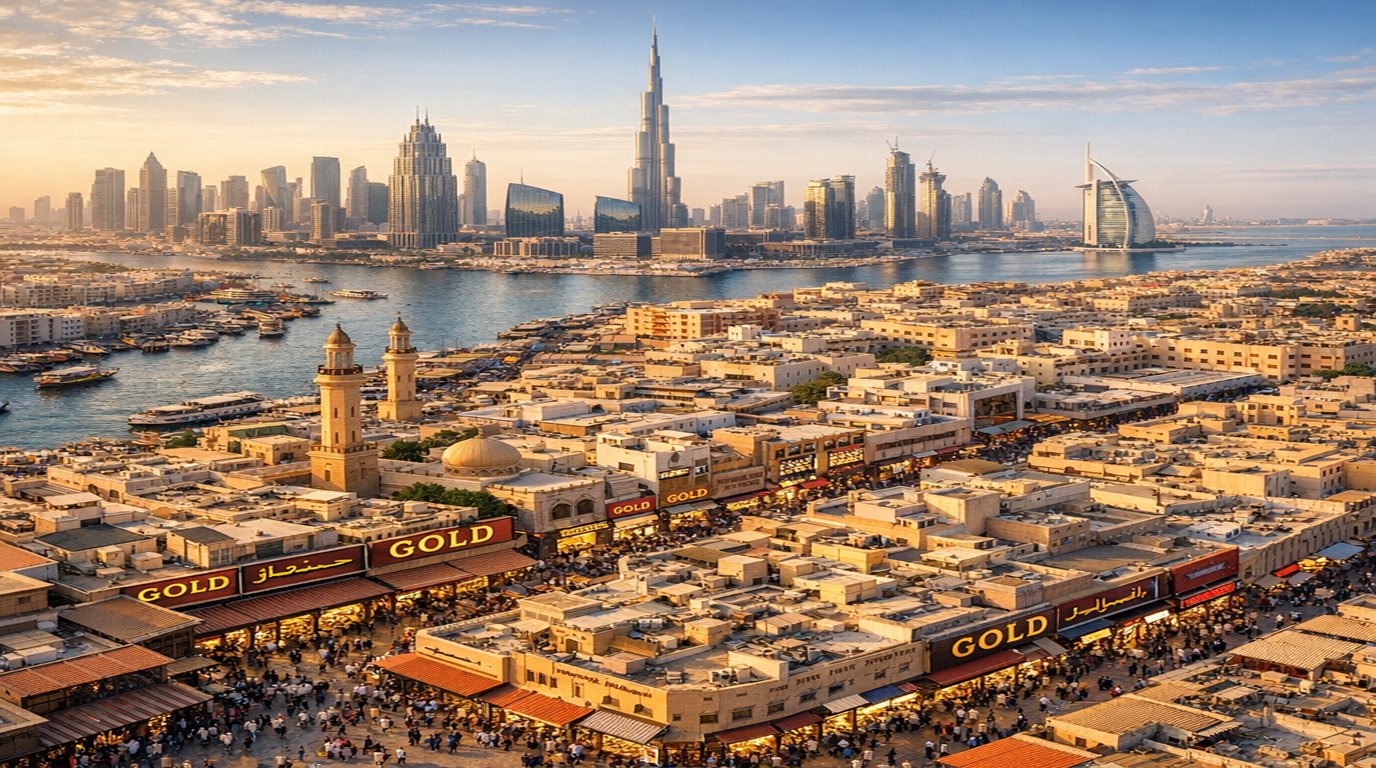
At the nexus of these flows sits Dubai — a city that has spent decades positioning itself as the region's indispensable commercial gateway. Dubai's gold market handles an estimated 25 to 30 percent of the world's physical gold trade. Its airports — Dubai International (DXB) and Al Maktoum International (DWC) — collectively rank among the busiest in the world, serving as critical connecting points for hundreds of millions of passengers and millions of tonnes of cargo annually. Its free trade zones, financial institutions, and logistics infrastructure make it the de facto business capital of the wider Middle East.
When military conflict erupts in the region, these commercial lifelines are among the first to feel the impact. The recent US-Israeli military strikes against targets in Iran have demonstrated this dynamic with striking clarity, disrupting gold flows, grounding flights, rattling commodity markets, and raising urgent questions about the resilience of the trade networks upon which the global economy depends.
This article provides a comprehensive analysis of how these military strikes have affected Dubai's gold trade and regional aviation, the cascading economic consequences for the Gulf and beyond, and what these disruptions reveal about the fragility of global commerce in an era of intensifying geopolitical competition.
The Strategic Context: Understanding the US-Israeli Strikes on Iran
The Escalation Path
The military strikes against Iran did not emerge from a vacuum. They represented the culmination of years of escalating tensions between Iran and a coalition of adversaries led by the United States and Israel — tensions rooted in Iran's advancing nuclear program, its support for regional proxy forces, its ballistic missile development, and broader strategic competition for influence across the Middle East.
The trajectory toward direct military action accelerated through a series of increasingly provocative moves and countermoves:
- Iran's nuclear advancements: International Atomic Energy Agency (IAEA) reports indicated that Iran had continued to enrich uranium to levels increasingly close to weapons-grade purity, while restricting inspectors' access to key facilities.
- Regional proxy conflicts: Iranian-backed groups — including Hezbollah in Lebanon, Shia militias in Iraq and Syria, and the Houthis in Yemen — had intensified operations that directly or indirectly threatened US and Israeli interests.
- Direct confrontations: A pattern of direct and indirect military exchanges between Iran and Israel — including strikes attributed to Israel against Iranian assets in Syria and alleged Iranian retaliatory operations — had progressively eroded the threshold for open conflict.
- Diplomatic stalemate: Efforts to revive or replace the 2015 Joint Comprehensive Plan of Action (JCPOA) nuclear agreement had stalled, closing diplomatic off-ramps that might have defused tensions.
The Nature of the Strikes
While detailed operational information remains subject to official confirmation and ongoing intelligence assessment, reports indicate that US and Israeli forces conducted coordinated strikes against multiple target categories in Iran, potentially including:
- Nuclear facilities and related infrastructure
- Missile production and storage sites
- IRGC (Islamic Revolutionary Guard Corps) military installations
- Air defense systems
- Command and control infrastructure
The scale and scope of the operation — involving assets deployed across multiple theaters — underscored the seriousness of the escalation and immediately raised concerns about potential Iranian retaliation and the risk of a broader regional conflagration.
Dubai's Gold Trade: The World's Golden Crossroads Under Pressure
Why Dubai Is Central to Global Gold Flows
To understand why military strikes against Iran would disrupt gold flows through Dubai — a city located in the United Arab Emirates, not in Iran — it is necessary to appreciate the geographic, logistical, and commercial realities of the global gold trade.
Dubai has methodically built itself into the world's largest physical gold trading hub over the past several decades. The emirate's gold market ecosystem includes:
- The Dubai Gold and Commodities Exchange (DGCX): A major derivatives exchange for gold and other commodities
- The Dubai Multi Commodities Centre (DMCC): The world's largest free trade zone for commodities, hosting thousands of gold trading companies
- The Dubai Gold Souk: The historic retail market that handles enormous volumes of physical gold
- Refineries: Several major gold refineries operating in Dubai process raw gold from sources across Africa, Central Asia, and other regions
- Logistics and vaulting infrastructure: Secure storage, transportation, and insurance services that facilitate the physical movement of gold
Dubai's gold trade depends critically on stable air transport links and secure regional conditions. Gold — being a high-value, relatively compact commodity — is overwhelmingly transported by air rather than sea. Commercial and cargo flights carrying gold shipments transit through Dubai's airports from mining regions in Africa (particularly East and Central Africa), Central Asia, and other source markets, before being refined, traded, and reshipped to end markets in India, China, Europe, and elsewhere.
How the Strikes Disrupted Gold Flows
The US-Israeli strikes on Iran disrupted Dubai's gold trade through several interconnected mechanisms:
1. Airspace Closures and Flight Cancellations
The immediate closure of Iranian airspace — and the precautionary closure or restriction of airspace in neighboring areas — severed key air routes that connect Dubai to gold source markets in Central Asia, the Caucasus, and parts of Africa. Cargo flights carrying gold shipments were cancelled, delayed, or forced onto longer alternative routes, increasing transit times and costs.
2. Risk Premiums and Insurance Costs
The escalation triggered a sharp increase in war risk insurance premiums for flights operating in or near the conflict zone. Airlines and cargo operators faced dramatically higher costs for insuring aircraft and cargo against conflict-related risks, with some insurers temporarily suspending coverage entirely for certain routes. These cost increases were passed through the supply chain, raising the expense of transporting gold through the region.
3. Security Concerns and Operational Caution
Gold trading and logistics companies — many of which are privately owned and risk-averse — responded to the heightened security environment by voluntarily pausing or reducing operations. The physical security of gold in transit, in refineries, and in vaulting facilities became a heightened concern, particularly given the potential for Iranian retaliatory strikes against targets in the Gulf.
4. Market Volatility and Trading Disruptions
The broader commodity market reaction to the strikes — including a surge in gold prices as investors sought safe-haven assets — created volatility that complicated commercial gold trading operations. Physical traders faced challenges in pricing, hedging, and settling transactions amid rapidly shifting market conditions.
5. Financial Transaction Complications
The potential for expanded sanctions, financial restrictions, or disruptions to banking and payment systems in the region added another layer of uncertainty for gold traders, many of whom conduct transactions through Gulf-based financial institutions.
The Scale of the Impact
While precise figures on the volume of gold trade disrupted are difficult to obtain in real time, industry sources and analysts have indicated that the impact has been substantial:
- Daily gold flows through Dubai — which in normal times can exceed several billion dollars in value — were reportedly reduced significantly in the immediate aftermath of the strikes.
- Refineries in Dubai and the broader UAE reported delays in receiving raw gold shipments, threatening production schedules and delivery commitments.
- Downstream markets — particularly India, which is the world's second-largest gold consumer and relies heavily on Dubai as a sourcing and transit point — began to experience supply tightening and price premiums above international benchmarks.
Gold Prices and Safe-Haven Demand
Paradoxically, while the physical trade in gold through Dubai was being disrupted, the price of gold surged globally as investors rushed into the metal as a safe-haven asset. Gold prices spiked to new highs in the immediate aftermath of the strikes, driven by:
- Geopolitical risk premium: Uncertainty about the scope and duration of the conflict, the potential for Iranian retaliation, and the risk of broader regional war all boosted demand for gold as a store of value.
- Currency and inflation concerns: The potential economic fallout from a major Middle East conflict — including oil price spikes, supply chain disruptions, and inflationary pressures — further enhanced gold's appeal.
- Central bank demand: Reports indicated that several central banks accelerated gold purchases as a hedge against geopolitical instability.
This dynamic — physical trade disruption coinciding with surging prices — created a challenging environment for commercial gold market participants, who found themselves unable to move metal efficiently even as the value of their inventory was rising sharply.
Aviation Disruptions: Flights Halted Across the Region
The Immediate Impact on Air Travel
The military strikes triggered immediate and far-reaching disruptions to commercial aviation across the Middle East and surrounding regions. The impact manifested in several dimensions:
Airspace Closures:
Iranian airspace — which serves as a critical corridor for flights between Europe, the Gulf, South Asia, and East Asia — was closed to commercial traffic immediately following the strikes. Neighboring countries, including Iraq, also implemented airspace restrictions or closures in response to the heightened security environment.
The closure of Iranian airspace is particularly consequential because of its geographic position. Approximately 300 to 400 commercial flights per day normally transit through Iranian airspace, connecting major city pairs such as:
- Europe to Southeast Asia and Australia
- Europe to India and South Asia
- Gulf states to Central Asia and East Asia
- Turkey and the Caucasus to South and East Asia
Flight Cancellations and Diversions:
Airlines operating in and through the region responded with a wave of cancellations, suspensions, and route diversions:
- Gulf carriers — including Emirates, Etihad Airways, Qatar Airways, and flydubai — cancelled or suspended numerous flights, particularly those routing through or near Iranian airspace.
- International carriers with Gulf hub connections — including European, Asian, and North American airlines — cancelled or rerouted services to and through the region.
- Cargo operators — including major freight carriers that use Gulf airports as logistics hubs — suspended or diverted shipments.
Route Diversions and Extended Flight Times:
Flights that continued to operate were forced to take significantly longer alternative routes to avoid the conflict zone. Common diversions included:
- Routing south over Saudi Arabia and the Arabian Sea, adding hours to flights between Europe and Asia
- Routing north through Turkmenistan, Kazakhstan, and Central Asian airspace
- Routing over Egyptian and East African airspace for connections between Europe and the Indian subcontinent
These diversions added two to five hours to typical flight times, increased fuel consumption and costs, and strained airline scheduling and crew management systems.
Impact on Dubai's Aviation Hub
Dubai International Airport (DXB) — which vied for the title of the world's busiest international airport and served as the home hub for Emirates, one of the world's largest airlines — was particularly hard hit.
The airport's strategic value is built on its role as a connecting hub between East and West. A significant portion of Dubai's passenger traffic consists of transfer passengers who use the airport as a stopover point on longer journeys. With flights cancelled, rerouted, or operating on extended schedules, the hub's efficiency and attractiveness were severely compromised.
Specific impacts on Dubai's aviation sector included:
- Thousands of flights cancelled or delayed in the initial days following the strikes
- Tens of thousands of passengers stranded, rebooking, or seeking alternative routing
- Significant financial losses for Emirates and other Dubai-based carriers
- Disruption to air cargo operations, affecting supply chains for time-sensitive goods (electronics, pharmaceuticals, perishables, and, of course, gold)
- Reputational concerns about the region's stability and reliability as an aviation hub

The Broader Aviation Industry Response
The ripple effects extended well beyond the Gulf:
Airlines Worldwide:
Carriers from virtually every major aviation market were affected. European airlines (Lufthansa, British Airways, Air France-KLM), Asian carriers (Singapore Airlines, Cathay Pacific, Thai Airways), and others faced route disruptions, scheduling challenges, and increased operating costs.
Aviation Authorities:
National aviation authorities and international bodies — including the International Civil Aviation Organization (ICAO), the European Union Aviation Safety Agency (EASA), and the US Federal Aviation Administration (FAA) — issued NOTAMs (Notices to Air Missions) and advisories restricting or prohibiting flights through affected airspace.
Insurance and Risk:
Aviation insurers rapidly reassessed risk profiles for the region, with war risk premiums for flights operating near the conflict zone increasing dramatically — in some cases by multiples of pre-crisis levels. These increased costs were expected to be passed on to passengers and shippers through higher fares and freight rates.
Energy Markets: Oil and Gas Price Shockwaves
The Strait of Hormuz Factor
No analysis of the economic impact of military strikes on Iran would be complete without addressing the energy market dimension. Iran borders the Strait of Hormuz — the narrow waterway through which approximately 20 to 25 percent of the world's traded oil and significant volumes of liquefied natural gas (LNG) pass daily.
The fear that Iran might retaliate against the strikes by threatening shipping through the Strait — either directly through naval action or indirectly through mines, missiles, or proxy attacks — sent oil prices surging in the immediate aftermath of the strikes.
Oil Price Reaction
Crude oil prices — both Brent (the international benchmark) and WTI (the US benchmark) — spiked sharply following reports of the strikes:
- Brent crude surged by significant percentage points in the first trading sessions after the news broke
- WTI crude followed a similar trajectory
- Risk premiums embedded in oil prices — reflecting the probability-weighted cost of supply disruption — expanded dramatically
The oil price surge rippled through the global economy, raising concerns about:
- Inflationary pressures: Higher energy costs feed into transportation, manufacturing, and consumer prices, threatening to reignite inflation in economies that had been making progress toward price stability.
- Economic growth: An oil price shock acts as a tax on oil-importing economies, potentially slowing growth in major markets including Europe, Japan, India, and China.
- Central bank policy: Central banks faced the dilemma of whether to tighten monetary policy to combat energy-driven inflation or ease policy to support growth threatened by the geopolitical shock.
Natural Gas and LNG
Qatar — the world's largest LNG exporter — shares the Persian Gulf with Iran and exports virtually all of its LNG through the Strait of Hormuz. Any disruption to Qatari LNG shipments would have immediate consequences for energy security in Asia and Europe, both of which depend heavily on Qatari gas.
While LNG shipments were not immediately disrupted, the heightened risk environment led to increased shipping insurance costs, route assessments, and contingency planning by major LNG buyers.

Cascading Economic Consequences for the Gulf Region
Financial Markets
Stock markets across the Gulf Cooperation Council (GCC) states — including the Dubai Financial Market (DFM), Abu Dhabi Securities Exchange (ADX), Saudi Tadawul, and Qatar Stock Exchange — experienced significant selling pressure as investors reassessed regional risk.
Sectors most affected included:
- Airlines and aviation services: Shares in Emirates-linked companies, Air Arabia, and other regional carriers declined sharply
- Tourism and hospitality: Hotels, entertainment companies, and tourism operators faced booking cancellations and demand uncertainty
- Real estate: Dubai's property market — heavily dependent on international investor confidence — faced sentiment headwinds
- Banking and finance: Financial institutions with exposure to regional trade, Iranian-linked transactions, or conflict-affected sectors came under pressure
Trade and Logistics
Dubai's role as a regional trade hub extends far beyond gold and aviation. The emirate's ports (particularly Jebel Ali, one of the world's largest container ports), free trade zones, and logistics networks facilitate trade flows worth hundreds of billions of dollars annually.
The conflict introduced uncertainty into these flows through:
- Shipping route disruptions: Vessels transiting the Persian Gulf and the Strait of Hormuz faced elevated risks, higher insurance costs, and potential delays
- Supply chain rerouting: Companies began assessing alternative supply chain configurations to reduce dependence on Gulf transit points
- Trade finance complications: Banks and financial institutions tightened risk assessments for transactions linked to the conflict zone
Tourism
Dubai and the broader UAE have invested heavily in positioning themselves as global tourism destinations. The perception of regional instability — even if the UAE itself is not directly involved in the conflict — can deter international visitors, affecting hotels, airlines, retail, and entertainment sectors that depend on tourist spending.
Global Supply Chain Implications
The Fragility of Concentrated Trade Routes
The disruptions triggered by the strikes underscore a vulnerability that supply chain experts have warned about for years: the global economy's dependence on a small number of critical chokepoints — geographic bottlenecks through which disproportionate volumes of trade must pass.
The Middle East contains several of these chokepoints:
- The Strait of Hormuz (oil and LNG)
- The Suez Canal (container shipping between Asia and Europe)
- The Bab el-Mandeb Strait (connecting the Red Sea to the Indian Ocean)
- Gulf airports (aviation connectivity between East and West)
When any of these chokepoints is threatened — whether by military conflict, piracy, natural disaster, or political instability — the impact cascades rapidly through interconnected global supply chains.
Lessons for Supply Chain Resilience
The current disruptions are likely to accelerate several trends already underway in global supply chain management:
- Diversification: Companies may seek to reduce reliance on Gulf transit points by developing alternative routing through Central Asia, Africa, or other corridors
- Inventory buffers: Just-in-time supply chain models — which minimize inventory to reduce costs — may give way to "just-in-case" approaches that prioritize resilience over efficiency
- Nearshoring and reshoring: The geopolitical risks associated with long, complex supply chains may encourage companies to bring production closer to end markets
- Digital supply chain management: Advanced analytics, real-time tracking, and AI-driven route optimization tools may become more critical as companies seek to navigate increasingly unpredictable logistics environments

The Gold Market in Focus: Short-Term Disruption vs. Long-Term Shifts
Immediate Market Dynamics
In the short term, the gold market is experiencing a classic supply-demand squeeze:
- Physical supply through Dubai is constrained due to flight cancellations, airspace closures, and operational caution
- Demand for gold is surging as investors seek safe-haven protection against geopolitical and economic uncertainty
- Price premiums in key consumer markets (India, China, Southeast Asia) are rising above international benchmarks, reflecting localized supply tightness
- Refineries in the UAE are operating below capacity due to raw material delivery delays
Potential Long-Term Shifts
If the conflict is protracted or if the security environment in the Gulf remains elevated for an extended period, more structural shifts in global gold trade patterns could emerge:
- Alternative trading hubs: Gold trade could shift toward alternative hubs in Switzerland (already the world's largest gold refining center), Singapore, Hong Kong, or London, reducing Dubai's market share
- Route diversification: Gold supply chains may be reconfigured to reduce dependence on Gulf transit, with direct shipping routes from African and Central Asian sources to end markets in Asia and Europe
- Digital gold trading: The disruption to physical gold flows may accelerate the adoption of digital gold platforms and tokenized gold assets that allow trading without physical delivery
- Central bank behavior: Central banks — which have been net buyers of gold in recent years — may accelerate efforts to repatriate gold reserves from overseas storage to domestic vaults, reducing exposure to supply chain disruption
What Comes Next: Scenarios and Outlook
Scenario 1: Rapid De-escalation
If diplomatic channels succeed in containing the crisis — potentially through ceasefire negotiations, third-party mediation (China, Turkey, or Gulf states), or mutual signaling of restraint — the immediate disruptions to gold flows and aviation could resolve relatively quickly. Airspace would reopen, flights would resume, insurance premiums would normalize, and trade flows would recover.
However, even a rapid de-escalation would leave lasting effects: higher baseline risk premiums, accelerated supply chain diversification, and a reminder of the Gulf's vulnerability to geopolitical shocks.
Scenario 2: Prolonged Tension Without Further Escalation
A more likely scenario may involve a period of sustained tension — with Iranian airspace remaining closed or restricted, elevated military postures on all sides, and ongoing uncertainty about potential retaliation — without a dramatic further escalation.
In this scenario, disruptions to gold flows and aviation would persist for weeks or months, with gradual adaptation as airlines establish alternative routes, gold traders find workarounds, and markets adjust to a new risk baseline.
Scenario 3: Further Escalation
The most concerning scenario involves Iranian retaliation — whether through direct military action, proxy attacks, cyberattacks on critical infrastructure, or threats to shipping through the Strait of Hormuz — triggering a cycle of escalation that draws in additional parties and threatens the region's economic infrastructure more broadly.
In this scenario, disruptions to gold flows and aviation would be the least of the world's concerns, as oil supply disruptions, broader financial market turmoil, and the risk of wider war would dominate the global agenda.
Conclusion: The Intersection of Security and Commerce in a Volatile World
The disruption of Dubai's gold flows and the halting of flights across the Middle East following US-Israeli strikes on Iran serve as a stark reminder of a fundamental truth of the modern global economy: security and commerce are inseparable.
The elaborate networks of trade, transportation, and finance that sustain global prosperity are built on foundations of geopolitical stability and predictable risk. When those foundations are shaken — as they have been by the escalation in the Gulf — the consequences cascade with remarkable speed, affecting gold traders in Dubai, airline passengers in London, energy consumers in Tokyo, and supply chain managers in New York.
Dubai, in particular, faces a pivotal moment. The city's economic model — built on its role as the region's indispensable commercial hub — depends on the perception that it offers stability, connectivity, and reliability in an otherwise volatile neighborhood. The current crisis tests that perception in ways that previous disruptions — including the COVID-19 pandemic and regional conflicts — have not.
For the global gold market, the disruptions highlight the concentration risks inherent in routing such a large share of physical gold trade through a single geographic corridor. For the aviation industry, they underscore the vulnerability of hub-and-spoke models that depend on the accessibility of key airspace. For energy markets, they revive the perennial fear of a Strait of Hormuz disruption — the single most consequential supply chain risk in the global oil market.
As governments, businesses, and investors assess the fallout and plan for contingencies, one lesson stands above all others: in an interconnected world, geopolitical risk is economic risk — and the costs of instability in critical regions are borne not just by the nations directly involved, but by the entire global economy.
The situation remains fluid, and much depends on the choices made in the coming days and weeks by decision-makers in Washington, Jerusalem, Tehran, and capitals across the Gulf and beyond. What is certain is that the reverberations of this moment — in gold markets, aviation corridors, energy pricing, and strategic calculation — will be felt for a long time to come.

Post your opinion
No comments yet.