Is Ayatollah Khamenei Dead or Alive? The Latest on US-Iran Strikes, Israel's Military Operations, and the Middle East Crisis in 2026
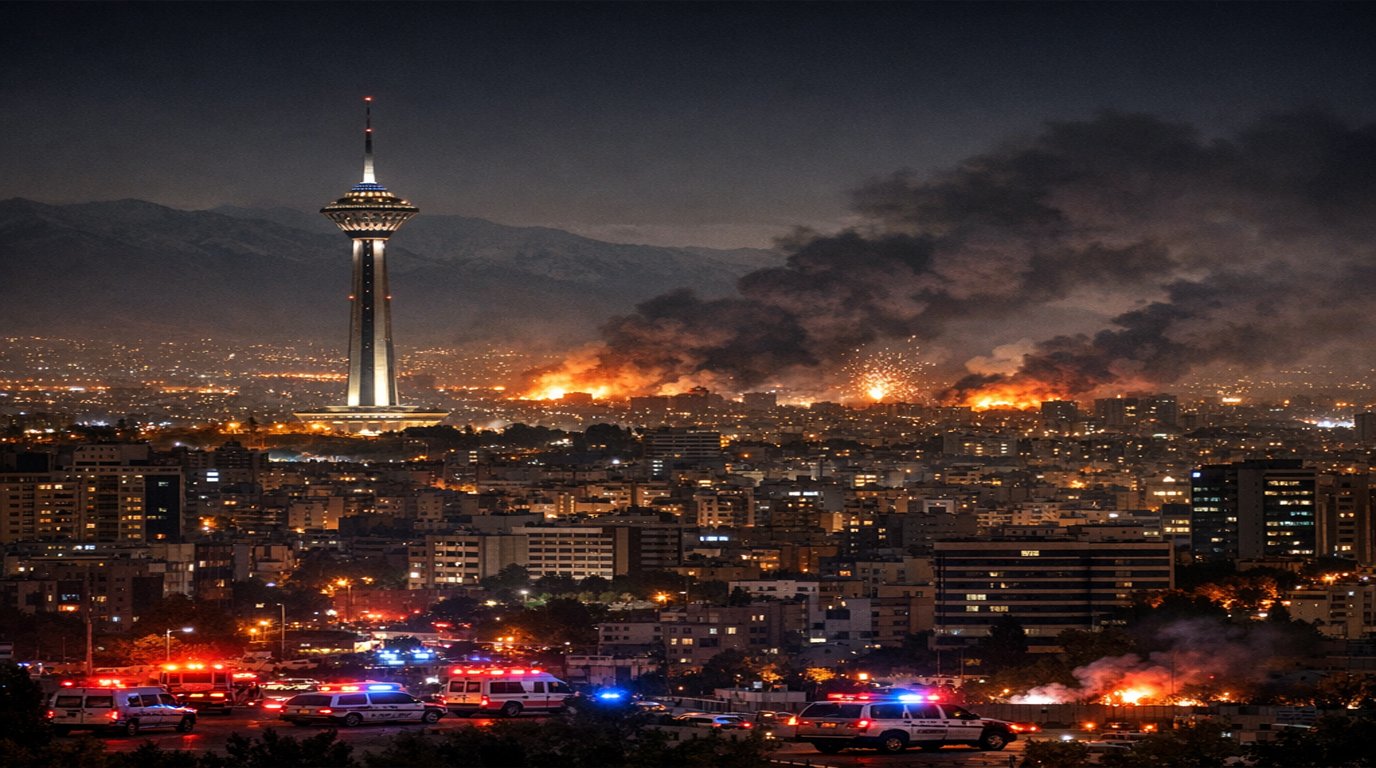
The Middle East on the Brink
In the early hours of what many analysts are already calling the most significant military escalation in the Middle East since the 2003 invasion of Iraq, the United States and Israel launched a series of coordinated strikes against military, nuclear, and command-and-control targets across Iran. The operation — involving cruise missiles, stealth aircraft, and advanced precision munitions — targeted sites in multiple Iranian provinces, including facilities in and around the capital, Tehran.
Within hours, the world was confronted with a question that carried implications far beyond any single military operation: Is Ayatollah Ali Khamenei — the 86-year-old Supreme Leader who has governed the Islamic Republic for more than 35 years — dead or alive?
The question is not merely biographical. As explored in depth throughout this article, Khamenei's status is the single most consequential variable in determining how this crisis unfolds. If he is alive and in command, Iran's response will follow established decision-making channels, however aggressive they may be. If he is dead, incapacitated, or unable to communicate with his military commanders, Iran faces a leadership vacuum at the most dangerous possible moment — with profound implications for the country's nuclear arsenal ambiguity, its regional proxy network, and the risk of uncontrolled escalation.
As of the latest available reports, no definitive, independently verified confirmation of Khamenei's status has emerged. This article examines what is known, what is rumored, what is strategically significant, and what the world should be watching for as this crisis continues to evolve.
The Strikes: What Happened and What Was Targeted
The Scale of the Operation
The US-Israeli military operation against Iran appears to have been one of the most complex and expansive combined strikes conducted in the Middle East in recent memory. Based on available reporting from multiple international sources, intelligence analysts, and official statements, the operation involved:
- Long-range cruise missiles launched from US naval vessels in the Persian Gulf, Arabian Sea, and potentially the Mediterranean
- Stealth aircraft — including US B-2 Spirit bombers and potentially Israeli F-35I Adir jets — penetrating Iranian airspace
- Standoff munitions launched from outside Iranian airspace to minimize pilot risk
- Cyber operations targeting Iranian air defense networks, communications infrastructure, and command-and-control systems
- Electronic warfare to suppress and degrade Iran's integrated air defense system
The strikes were reportedly conducted in multiple waves over a period of several hours, suggesting a carefully sequenced campaign designed to systematically degrade Iran's defensive capabilities before striking primary targets.
Target Categories
While official target lists have not been publicly released in full, reporting from US and Israeli officials, satellite imagery analysis, and regional intelligence sources indicates that the strikes targeted several categories of sites:
1. Nuclear Facilities
Iran's nuclear infrastructure — long the primary source of international concern — was reportedly a central focus of the strikes. Key facilities believed to have been targeted include:
- Natanz: Iran's primary uranium enrichment facility, located in Isfahan province. The site includes both above-ground and deeply buried underground centrifuge halls.
- Fordow: A heavily fortified enrichment facility built deep inside a mountain near the city of Qom. Fordow has long been considered one of the most challenging targets for military planners due to its underground depth and hardened construction.
- Isfahan: The Isfahan Nuclear Technology Center, which houses uranium conversion facilities.
- Arak: The site of a heavy water reactor that could potentially produce plutonium.
- Various research, development, and assembly sites linked to Iran's nuclear weapons research — some of which had been identified through intelligence collected over many years.
2. Missile and Drone Production Facilities
Iran's extensive ballistic missile and drone programs — which have provided weapons to proxy forces across the region and threatened US and Israeli assets — were reportedly targeted at multiple production, assembly, and storage sites.
3. IRGC Military Installations
Bases, headquarters, and operational facilities belonging to the Islamic Revolutionary Guard Corps (IRGC) — the regime's primary military and security instrument — were struck across multiple provinces.
4. Air Defense Systems
Iran's air defense network — including Russian-supplied S-300 systems and domestically produced systems — was reportedly subjected to dedicated suppression and destruction operations, both through kinetic strikes and electronic/cyber warfare.
5. Command and Control Infrastructure
Communications centers, intelligence facilities, and senior leadership command posts were reportedly among the targets — raising the question of whether strikes on command facilities may have directly or indirectly affected Khamenei or other senior leaders.

The Central Question: Is Ayatollah Khamenei Dead or Alive?
The Information Vacuum
In the hours and days following the strikes, the single most urgent — and most elusive — question has been the status of Iran's Supreme Leader, Ayatollah Ali Khamenei.
The difficulty in answering this question stems from multiple factors:
- Communications disruptions: The strikes reportedly damaged or degraded significant portions of Iran's telecommunications and internet infrastructure, making it difficult for information to flow out of the country — and difficult for Iranian authorities to communicate internally.
- Deliberate Iranian opacity: Even in normal times, Iran's government closely controls information about the Supreme Leader's health, location, and activities. In a crisis, this opacity intensifies dramatically.
- Fog of war: In the chaotic aftermath of large-scale military strikes, accurate information is scarce and misinformation is abundant. Reports from social media, opposition groups, regional intelligence services, and even government sources must be treated with extreme caution.
- Strategic ambiguity: Both sides may have reasons to obscure the truth. Iran may wish to conceal a leadership injury or death to prevent internal panic, maintain command authority, and buy time for succession planning. The US and Israel may wish to avoid confirming a leadership strike to manage escalation dynamics and legal liability.
What the Various Sources Are Saying
As of the latest available reporting, multiple and often contradictory claims have emerged:
Iranian Government Sources:
Official Iranian state media initially went silent in the hours immediately following the strikes — a silence that itself fueled intense speculation. Subsequently, Iranian state television broadcast statements attributed to senior officials affirming that the Supreme Leader was "safe and in command" — but notably without providing live video footage, a direct audio address from Khamenei himself, or other verifiable proof of life.
Some Iranian officials have described the Supreme Leader as having been relocated to a "secure location" prior to or during the strikes — a claim consistent with established continuity-of-government protocols but insufficient to quell speculation.
Opposition and Diaspora Sources:
Iranian opposition groups — both inside the country and in the diaspora — have circulated claims ranging from the Supreme Leader's death to severe injury to safe evacuation. These sources, while sometimes well-connected, also have clear political motivations and have a mixed track record of accuracy regarding sensitive internal matters.
Western Intelligence and Government Sources:
US and Israeli officials have been notably cautious in their public statements about Khamenei's status. Some anonymous officials have been quoted as saying that the strikes were "not specifically targeting the Supreme Leader" — a formulation that leaves open the possibility of indirect harm while distancing the operation from an assassination characterization.
Intelligence agencies are reportedly analyzing all available signals intelligence (SIGINT), satellite imagery, communications intercepts, and human intelligence (HUMINT) to determine Khamenei's status, but have not made definitive public assessments.
Regional Intelligence Services:
Intelligence agencies in Gulf states, Turkey, and Iraq — all of which maintain networks of contacts within Iran — have reportedly provided their own assessments to allied governments, but these have not been publicly disclosed and may themselves be uncertain.
Why Khamenei's Status Matters So Much
The question of whether Khamenei is alive, dead, or incapacitated is not merely a matter of biographical interest. It has profound strategic implications:
1. Command Authority Over Retaliation
Iran's military response to the strikes — including potential orders to the IRGC, proxy forces, and missile units — flows through the Supreme Leader's office. If Khamenei is unable to exercise command authority, it raises questions about who, if anyone, has the legal and practical authority to order a retaliatory strike — and whether such orders might be issued by unauthorized actors or not issued at all.
2. Nuclear Decision-Making
If Iran possesses — or is close to possessing — nuclear weapons capability, the question of who controls the decision to weaponize or deploy such capability is existential. The Supreme Leader is widely believed to be the ultimate decision-maker on nuclear matters.
3. Succession Crisis
As analyzed in detail in previous sections of this article, the question of Khamenei's succession is one of the most consequential political transitions looming in the Middle East. A sudden, unplanned death — rather than the managed transition that many analysts expected — could trigger factional competition, institutional chaos, and a power vacuum at the worst possible moment.
4. Domestic Stability
Khamenei serves as the symbolic and practical keystone of the Islamic Republic's governing structure. His death or incapacitation — particularly in the context of a devastating military attack — could trigger unpredictable domestic reactions, ranging from patriotic rally-around-the-flag effects to opportunistic attempts at revolution by opposition movements.
5. Escalation Dynamics
The perception that the US and Israel killed Iran's Supreme Leader — whether or not that was the intention — could dramatically alter the escalation calculus. Iranian hardliners might view such an act as demanding the most extreme possible retaliation, including attacks on US bases, Israeli territory, Gulf infrastructure, or even nuclear escalation.
Israel's Military Operations: Expanding the Campaign
Israel's Role in the Strikes
Israel's participation in the military strikes against Iran represents a historic escalation in the decades-long shadow war between the two countries. While Israel has conducted numerous covert operations against Iranian nuclear scientists, cyber attacks against nuclear facilities (most notably the Stuxnet operation), and airstrikes against Iranian assets in Syria and elsewhere, direct, overt military strikes against targets on Iranian soil represent a fundamentally different category of action.
Israel's military contributions to the operation reportedly included:
- F-35I Adir stealth fighter-bombers conducting strike missions against high-priority targets
- Intelligence sharing from Mossad and military intelligence (Aman) that informed target selection and battle damage assessment
- Aerial refueling and logistical support
- Cyber and electronic warfare capabilities
- Jericho ballistic missiles on standby alert, though their use has not been confirmed
Israel's Stated Objectives
Israeli officials have framed the strikes as a preventive action necessary to eliminate what they described as an imminent existential threat from Iran's nuclear program. Key elements of Israel's stated rationale include:
- Iran had crossed critical nuclear thresholds that placed it within weeks or months of weapons-grade enrichment capability
- Diplomatic efforts to constrain Iran's nuclear program had conclusively failed
- Iran's public threats against Israel — including repeated statements about Israel's destruction — constituted a credible existential threat that justified preemptive military action
- Iran's regional proxy network — particularly Hezbollah's arsenal of precision-guided munitions aimed at Israeli population centers — represented an unacceptable strategic risk that could only be addressed by degrading Iran's central command and military capabilities
Simultaneous Operations in Lebanon and Syria
Reports indicate that Israel may have conducted simultaneous or near-simultaneous military operations against Hezbollah targets in Lebanon and Iranian-linked assets in Syria, seeking to degrade Iran's proxy network at the same time as its homeland capabilities.
These operations, if confirmed, would represent an attempt to address the Iran threat holistically — striking not only Iran's nuclear and military infrastructure but also the regional proxy forces that serve as Iran's primary means of projecting power and threatening Israel.

The Trump Administration's Position
Official Statements
The Trump administration's public messaging around the strikes has emphasized several themes:
1. Prevention of Nuclear Proliferation
Senior officials have framed the operation as necessary to prevent Iran from acquiring nuclear weapons — a development they characterized as unacceptable to US national security interests and global stability.
2. Defense of Allies
The administration has emphasized its commitment to Israel's security and to the protection of US military personnel and assets in the region, citing Iranian threats and provocations as justification for action.
3. Degradation of Terrorist Infrastructure
Officials have characterized the IRGC and its proxy network as terrorist organizations responsible for the deaths of hundreds of Americans over decades, framing the strikes as a counterterrorism operation as well as a nonproliferation action.
4. Deterrence Messaging
Administration officials have issued stark warnings about the consequences of Iranian retaliation, signaling readiness for further military action if Iran escalates.
Domestic Political Dimensions
The strikes have generated sharp debate within the United States:
- Supporters argue that the strikes were a necessary and overdue response to a growing Iranian threat that previous administrations failed to adequately address. They point to Iran's advancing nuclear program, regional aggression, and support for groups that have attacked US forces and allies.
- Critics raise concerns about the lack of explicit congressional authorization for what amounts to an act of war against a sovereign nation, the risk of uncontrolled escalation into a broader regional conflict, the potential for a protracted military engagement, the humanitarian consequences for Iranian civilians, and the economic fallout — particularly the impact on oil prices and global markets.
- Legal questions have been raised about the domestic and international legal basis for the strikes, including whether existing Authorizations for Use of Military Force (AUMFs) cover operations against Iran and whether the strikes comply with international law regarding the use of force.
Iran's Potential Response: The Retaliation Question
The Range of Iranian Options
Iran possesses a diverse toolkit for retaliation, ranging from calibrated, deniable actions to massive, overt escalation. The option selected will depend on several factors, including the leadership situation, the extent of damage to military capabilities, and strategic calculations about costs and benefits.
1. Ballistic and Cruise Missile Strikes
Iran possesses the largest ballistic missile arsenal in the Middle East, including missiles capable of reaching Israel and US bases across the region. A large-scale missile barrage against Israeli territory, US military bases in Iraq, Qatar, Bahrain, the UAE, or Saudi Arabia, or critical infrastructure in Gulf states represents Iran's most direct and dramatic retaliatory option.
However, such an attack would risk massive US and Israeli counter-retaliation and could provide justification for regime-change operations that Iran's leaders would want to avoid.
2. Proxy Activation
Iran could order its network of regional proxies to launch coordinated attacks:
- Hezbollah could launch thousands of rockets and precision-guided missiles at Israeli cities and military targets from southern Lebanon
- Shia militia groups in Iraq could attack US military facilities and diplomatic compounds
- The Houthis in Yemen could intensify attacks on shipping in the Red Sea and potentially strike targets in Saudi Arabia and the UAE
- Hamas and Palestinian Islamic Jihad could attempt operations against Israeli targets
- Sleeper cells in various countries could be activated for terrorist attacks against US and Israeli interests globally
3. Strait of Hormuz Disruption
Iran could attempt to close or disrupt shipping through the Strait of Hormuz — the world's most critical oil chokepoint — through naval mines, anti-ship missiles, fast boat attacks, or threats to commercial vessels. This would trigger a global oil price crisis and represent a dramatic escalation with worldwide economic consequences.
4. Cyber Attacks
Iran has developed significant offensive cyber capabilities and could target US, Israeli, and Gulf critical infrastructure — including financial systems, power grids, water treatment facilities, and communications networks.
5. Asymmetric and Covert Operations
Iran could pursue covert retaliation through assassination attempts, sabotage operations, intelligence operations, and other deniable actions that allow it to inflict costs without triggering a full-scale war.
6. Nuclear Escalation
The most extreme — and most feared — scenario involves Iran accelerating toward nuclear weapons capability in response to the strikes. If Iran's enrichment infrastructure has not been completely destroyed, the regime might calculate that only a nuclear deterrent can prevent future attacks — potentially leading to a rapid "breakout" effort to produce weapons-grade material and assemble a device.

Humanitarian Concerns and Civilian Impact
The Human Cost
While military operations are described in the language of targets, sorties, and battle damage assessments, the human dimension of the strikes must not be overlooked.
Civilian casualties in Iran:
Despite US and Israeli claims of precision targeting, military strikes of this scale inevitably produce civilian casualties — whether from direct hits on targets located near populated areas, secondary explosions, debris, infrastructure damage, or the disruption of essential services.
Iran's major cities — including Tehran, Isfahan, and Shiraz — are densely populated. Military and nuclear facilities are often located in or near urban areas. The destruction of power, water, communications, and transportation infrastructure has cascading effects on civilian life, even when these systems are not directly targeted.
Early reports — difficult to verify given communications disruptions and restricted media access — suggest civilian casualties in multiple provinces, with hospitals in affected areas reportedly overwhelmed.
Displacement and panic:
Reports indicate that large numbers of Iranians in cities near strike sites have attempted to flee, creating traffic gridlock, overwhelming transportation systems, and generating a humanitarian crisis of internal displacement.
Essential services disruption:
Damage to power generation and distribution infrastructure, telecommunications networks, and transportation systems has disrupted essential services for millions of Iranian civilians, including access to healthcare, clean water, food distribution, and emergency services.
International Humanitarian Law Concerns
International humanitarian law (the law of armed conflict) requires that military operations distinguish between military objectives and civilian objects, take precautions to minimize civilian harm, and ensure that any incidental civilian damage is proportionate to the concrete military advantage gained.
Human rights organizations and international legal experts have called for independent investigation into whether the strikes complied with these principles, particularly regarding:
- Target selection and intelligence accuracy
- Precautions taken to minimize civilian casualties
- Proportionality of force relative to military objectives
- Impact on protected infrastructure (hospitals, water systems, power plants)
Global Reactions and Diplomatic Fallout
United Nations
The UN Secretary-General issued an urgent call for de-escalation and the protection of civilians, while the UN Security Council convened emergency sessions to address the crisis. However, the likelihood of meaningful Security Council action was immediately constrained by the veto power held by the United States (which conducted the strikes) and the competing interests of other permanent members (Russia and China, which maintain close relationships with Iran).
Russia and China
Russia condemned the strikes as an act of aggression and a violation of international law, while stopping short of announcing specific retaliatory measures. Russia's response is complicated by its own dependence on higher oil prices (which the crisis has generated) and its strategic partnership with Iran (including military cooperation and shared opposition to US hegemony).
China expressed "grave concern" and called for "restraint by all parties." China's response reflects its delicate balancing act: it is Iran's largest oil customer and a significant economic partner, but it also seeks to avoid direct confrontation with the United States and to protect its vast economic interests in the Gulf states.
European Union
EU member states' responses varied, with some expressing support for the stated objective of preventing Iranian nuclear weapons while raising concerns about the scale of the operation, the risk of escalation, and the humanitarian impact. The EU called for diplomatic channels to be maintained and for a return to negotiations.
Gulf States
The GCC nations — Saudi Arabia, the UAE, Qatar, Bahrain, Kuwait, and Oman — found themselves in an extraordinarily delicate position. Most maintain security partnerships with the United States while also pursuing diplomatic normalization with Iran (following the China-brokered Saudi-Iranian détente of 2023). Some Gulf states reportedly provided logistical support or airspace access for the strikes, while others attempted to maintain neutrality.
The Gulf states' primary concerns include:
- The risk of Iranian retaliatory strikes against their territory or infrastructure
- The economic impact of conflict on oil markets, trade, and tourism
- The potential for the conflict to destabilize their own Shia minority populations
- The long-term implications for regional security architecture
India, Japan, and Other Energy-Dependent Nations
Major oil-importing nations — including India, Japan, South Korea, and European countries — expressed alarm about the impact on energy supplies and prices. These nations face the prospect of higher oil costs, supply disruptions, and inflationary pressures at a time when many are already grappling with economic challenges.
Economic Shockwaves: Markets in Turmoil
Oil Markets
As discussed in the energy section, oil prices surged dramatically in response to the strikes, with Brent crude and WTI both spiking sharply. The combination of actual supply risk (potential Strait of Hormuz disruption, damage to Iranian production capacity), speculative positioning, and general risk aversion drove prices to levels that threaten global economic stability.
Global Stock Markets
Stock markets worldwide experienced significant selling pressure:
- US markets (Dow Jones, S&P 500, Nasdaq) fell sharply, led by declines in airlines, consumer discretionary, and technology sectors
- European markets declined broadly, with energy-intensive sectors particularly hard hit
- Asian markets experienced heavy selling, particularly in oil-importing economies
- Middle Eastern markets saw some of the steepest declines, reflecting direct regional exposure
Safe-Haven Assets
Investors rushed into traditional safe-haven assets:
- Gold prices surged to record or near-record levels
- US Treasury bonds rallied as investors sought the perceived safety of US government debt
- The US dollar strengthened against most currencies
- The Swiss franc and Japanese yen also benefited from safe-haven flows
Currency Markets
- The Iranian rial — already under severe pressure from sanctions — collapsed further on black market exchanges
- Gulf currencies — most of which are pegged to the US dollar — came under pressure as investors questioned the region's stability
- Emerging market currencies broadly weakened as risk appetite evaporated

The Succession Question Resurfaces With New Urgency
If Khamenei Is Dead: An Unplanned Transition
The possibility — unconfirmed but widely discussed — that Khamenei may have been killed or critically injured in the strikes transforms the succession question from a long-term strategic concern into an immediate crisis-management challenge.
An unplanned succession differs fundamentally from the managed transition that most analysts expected:
- No time for grooming or consensus-building among power brokers
- Factional competition may intensify as rival camps seek to install their preferred candidate
- The IRGC may assume de facto emergency authority, potentially marginalizing the clerical establishment
- The Assembly of Experts may face pressure to select a successor rapidly, potentially compromising the deliberative process
- External enemies (the US and Israel) may seek to exploit the leadership vacuum
- Domestic opposition movements may see an opportunity for action
Leading Succession Candidates in a Crisis Scenario
If an immediate succession becomes necessary, the leading candidates — discussed in detail in previous analysis — include:
- Mojtaba Khamenei (the Supreme Leader's son) — controversial but well-positioned within the security apparatus
- Sadeq Amoli Larijani — experienced conservative with broad institutional connections
- Ahmad Khatami — hardline cleric with Assembly of Experts prominence
- Alireza Arafi — seminary establishment leader
In a crisis, the IRGC's preferences may carry even more weight than usual, potentially favoring a candidate who will prioritize military response and regime survival over deliberative governance.
The Leadership Council Option
The Iranian Constitution provides for a leadership council as an alternative to individual Supreme Leader succession (Article 111). In a chaotic, contested transition — particularly if no single candidate commands sufficient consensus — this option might be invoked as a compromise, with a council of senior clerics exercising collective leadership authority.
While unprecedented and structurally complex, a leadership council could provide a mechanism for power-sharing among competing factions and buy time for a more deliberate succession process.
What to Watch: Key Indicators and Turning Points
As this crisis continues to evolve, several key indicators will signal its trajectory:
1. Proof of Life (or Confirmation of Death)
The definitive resolution of Khamenei's status — through verified video, audio, independent confirmation, or official acknowledgment — will be the single most consequential piece of information to emerge. Watch for:
- Live video or audio of Khamenei addressing the nation
- Statements from Khamenei's office with verifiable details (references to post-strike events)
- Independent diplomatic confirmation (e.g., foreign ambassadors in Tehran reporting contact with senior Iranian leaders)
- Official Iranian government acknowledgment
2. Iranian Retaliation
The nature, timing, and scale of Iranian retaliation — if it occurs — will determine whether the crisis remains contained or spirals into a broader regional war. Watch for:
- Missile launches targeting Israel, US bases, or Gulf states
- Proxy activation (Hezbollah rocket attacks, militia operations in Iraq, Houthi strikes)
- Naval activity in the Strait of Hormuz
- Cyber attacks on Western or Gulf infrastructure
- Terrorist operations against US or Israeli interests globally
3. Diplomatic Activity
Behind-the-scenes diplomatic efforts — potentially involving Oman (which has historically served as a back channel between the US and Iran), Qatar, Turkey, China, or the UN — may offer pathways to de-escalation. Watch for:
- Emergency UN Security Council resolutions
- Statements from potential mediators
- Back-channel communications between Washington and Tehran
- Ceasefire proposals or conditions
4. Domestic Iranian Dynamics
The reaction of the Iranian population — whether rallying behind the regime in a nationalist response to foreign attack or seizing the moment to press for change — will shape the internal political landscape. Watch for:
- Mass demonstrations (pro-regime or anti-regime)
- IRGC and Basij mobilization
- Social media activity from inside Iran (to the extent communications are restored)
- Statements from opposition figures and diaspora groups
5. Oil Market and Strait of Hormuz
The status of oil shipments through the Strait of Hormuz will serve as a barometer of escalation risk. Watch for:
- Reports of shipping disruptions, mine-laying, or naval incidents
- Oil price movements as a real-time indicator of market risk assessment
- Statements from OPEC and major oil producers regarding supply contingencies
Conclusion: A Region — and a World — Holding Its Breath
The US-Israeli military strikes against Iran and the swirling uncertainty about the fate of Ayatollah Ali Khamenei have plunged the Middle East into its most dangerous moment in a generation. The convergence of military escalation, leadership uncertainty, nuclear stakes, proxy conflict potential, energy market disruption, and global economic fallout creates a crisis of extraordinary complexity and consequence.
For the Iranian people — 88 million men, women, and children who had no say in the decisions that led to this confrontation — the immediate reality is one of fear, disruption, and uncertainty. Whatever one's views on the Iranian government, the Islamic Republic's nuclear program, or the strategic calculations of the United States and Israel, the human dimension of this crisis must remain central to the global conversation.
For the Middle East, the strikes and their aftermath will reshape the regional order in ways that are not yet fully discernible. Alliances will be tested, power balances will shift, and the calculus of deterrence that has governed — however imperfectly — the region's conflicts for decades may be fundamentally altered.
For the world, this crisis is a stark reminder that geopolitical conflicts in critical regions do not remain contained. The economic, energy, financial, and humanitarian ripple effects of the US-Iran confrontation are already being felt in fuel prices, stock markets, airline routes, and commodity flows around the globe.
The hours and days ahead will be decisive. The choices made by leaders in Tehran, Washington, Jerusalem, and capitals across the region will determine whether this crisis is contained, managed, and ultimately resolved — or whether it escalates into a broader conflagration with consequences that none of its architects intended and none of its victims deserved.
The world is holding its breath. And it is right to do so.

Post your opinion
No comments yet.